显示标签为“news”的博文。显示所有博文

2020年11月14日星期六

A Self-healing 3D Printed Plastic Webs Could Save Cracked Phone Screen

 There are few things more frustrating than getting a little tiny crack or even a big crack in your smartphone screen. That’s really annoying. My friend recently dropped his phone with a screen protector again. He’ve broken that screen about four times over the period of the last 2 or 3 months. Ah, If we could only get a self-healing phone screen! 

Thanks to  the efforts of  the Professors Frédérick Gosselin and Daniel Therriault, Now we can do more than just imagine.

These two researchers have much success in producing an ultra-strong polymer fibre and  the inspiration came from the structure of spider silk.They claimed it was made of the unique molecular structure of the proteinacious material,which can absorb up to 96 percent of impact energy before breaking. This helps to creat the unbreakable plastic coverings for various kinds of delicate technology devices.
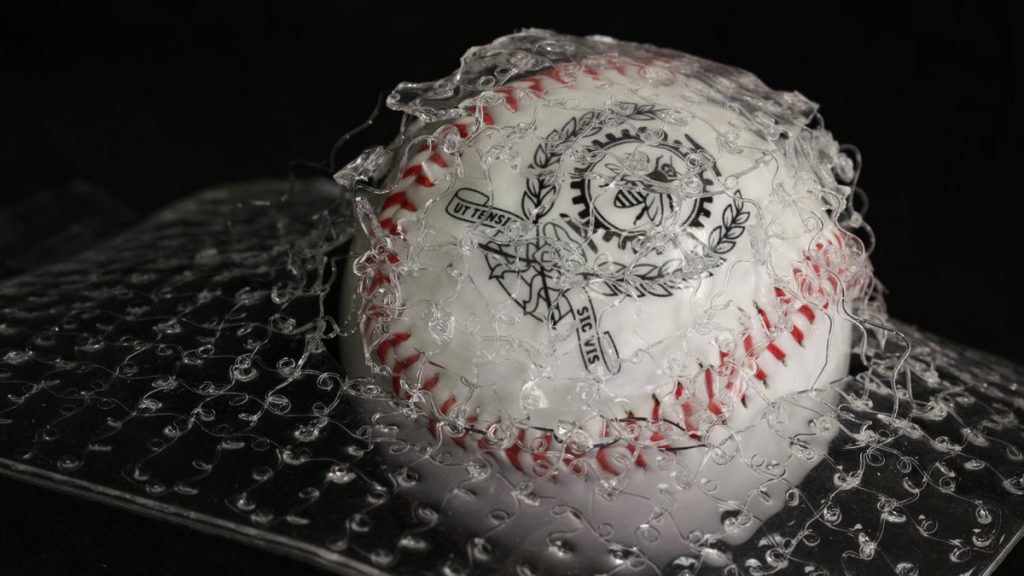
Image credits: Ashkan Forouzani | Unsplash,Shibo Zou.

Other than this bionic design,the researchers adopted the technology of 3D printing. Heat the polycarbonate first to make it become viscous like honey.Then Professor Gosselin’s team made use of this property to print a series of fibres less than 2mm thick. They repeated the process quickly, “weaving” a new series of fibers in a vertical arrangement to achieve the entire network solidification.

It’s worth noting that as the 3D printer slowly extruded polycarbonate to form a fiber, the molten plastic finally formed a series of hardened loops that give the fiber extra strength as sacrificial links.
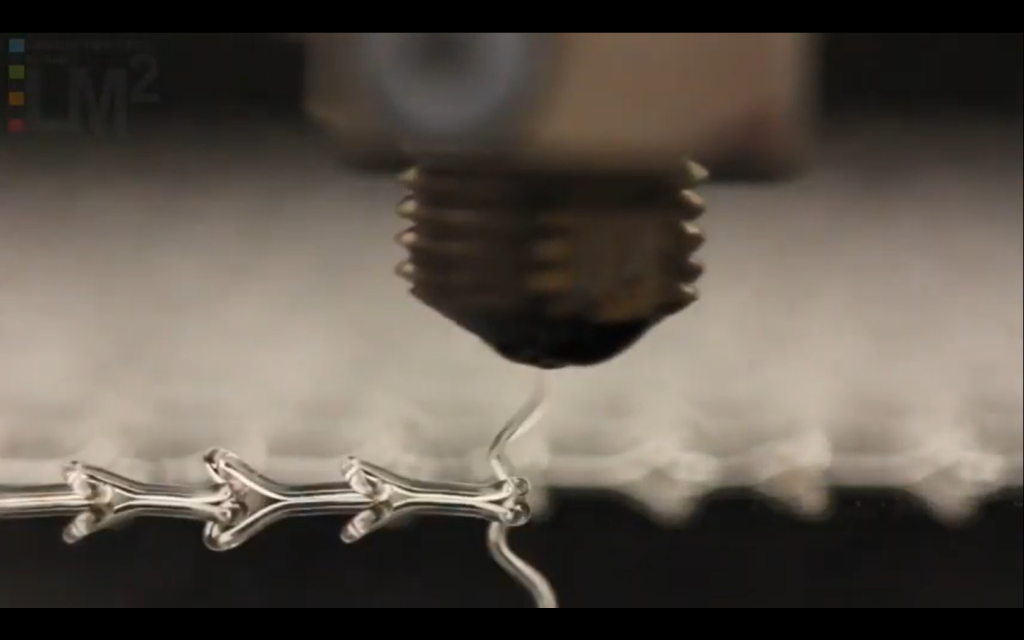
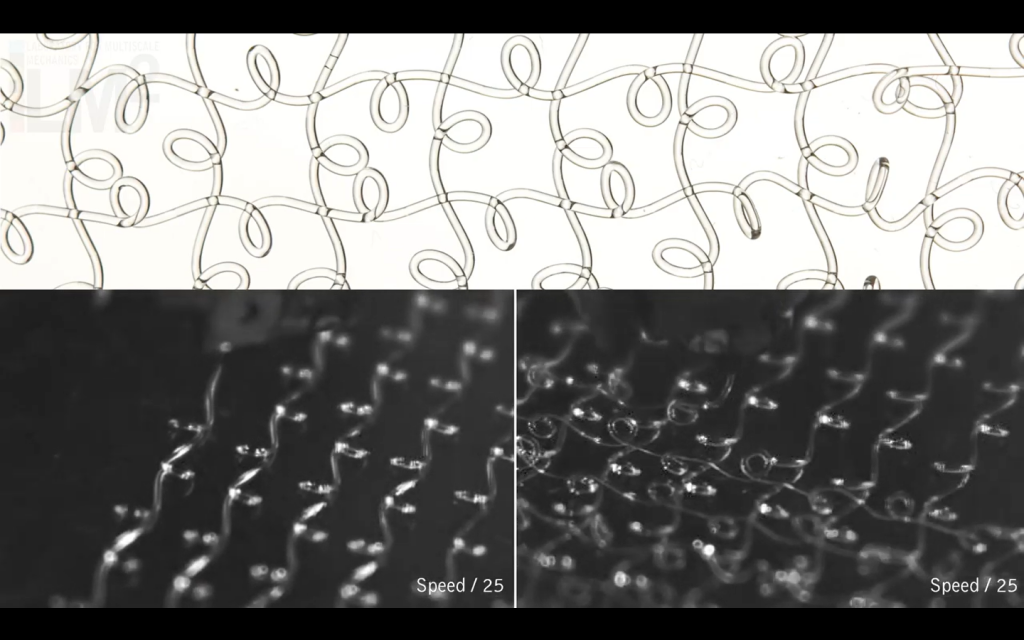
The molten plastic is slowly extruded by the 3D printer to form a fibre
Instability-assisted 3D printing of polycarbonate fiber with sacrificial bonds

When the impact happened,  these fibers actively withstood the damage caused by the impact energy, sacrificing the ego in the similar way that spider silk proteins do to protect the integrity of the whole.

Looking forward , the technology is expected to help electronic devices achieve the desired effect of impact protection.We might also be able to make a new type of bullet-proof glass, or a protective coating for aircraft engines.

2020年11月8日星期日

The Smallest 3D-Printed Boat You’ve Ever Seen

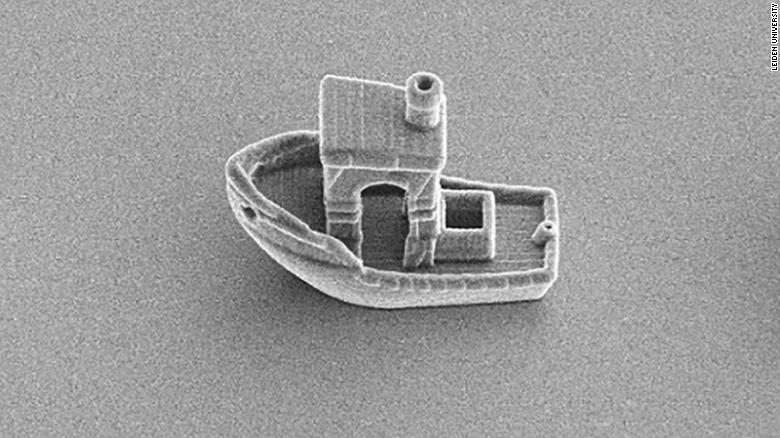
 You must be surprised When you see the iPhone 12 mini for the first time , which is literally tiny by contemporary standards.In the real world, , we may think of a small thing as nothing more than a bean or a grain of sand, or even a strand of hair.But you know what, scientists used a 3D printer to create a 3D Benchy boat, the length of which is 1/3 the thickness of a hair, 6 times larger than a bacterial cell.

Researchers used a scanning electron microscope to photograph the ship for purpose of showing its open cabin, a chimney, and even a small porthole. What’s most impressive is that  the entire model is very tiny, which means it’s even smaller than a statuet created by artist Jonty Hurwitz in 2014 as a potential design for creating a little drug delivery vehicle.

The researchers conducted investigations into small particles called microswimmers that can move through fluids, and be followed by a microscope.They created many structures , including a spiky sphere, a spiral, a trimer,a 3D Benchy boat and so on. Research shows that particles created in a helix shape can go around and be efficient. 

“When it moves forward, often it needs to rotate, and that helps, for example, to speed it up.”Daniela Kraft said, a physicist at the Dutch university,adding that the small particle that goes to a particular part of the body to deliver drugs has to propel itself and may have to deal with the complex environment in human’s body.

Watch These Bionic 3D -Printed Coral Lamps

  It’s one thing to create attractive and functional light fixture, and quite another thing to make a stunning light using algorithms that c...