It’s one thing to create attractive and functional light fixture, and quite another thing to make a stunning light using algorithms that copy coral growth patterns.
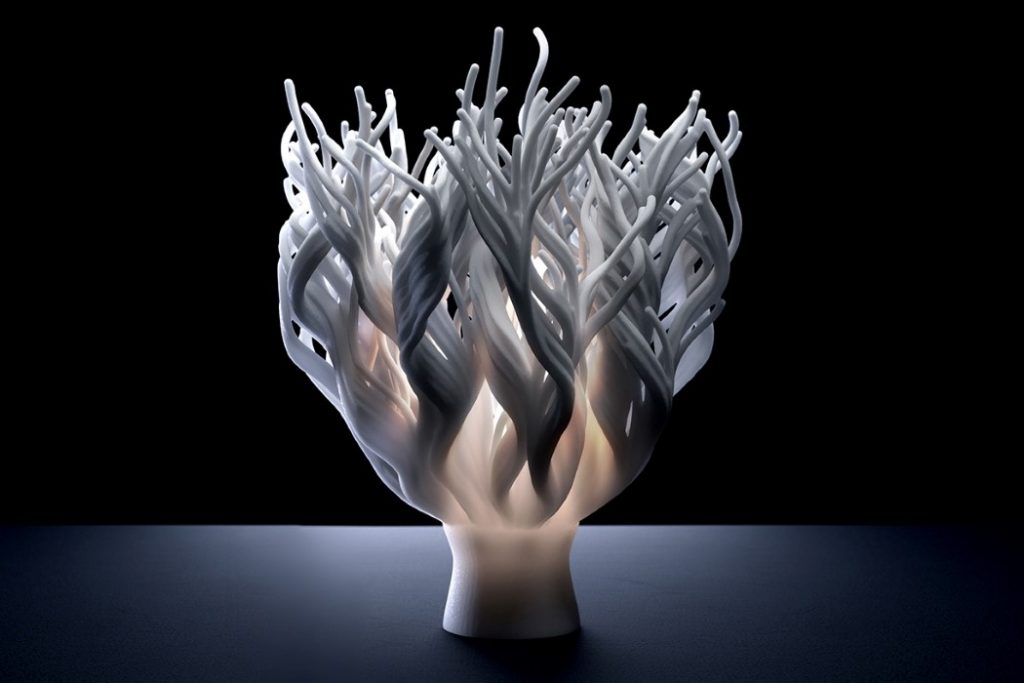
The 3d-printed Sargasso lamp
Industrial designer John Mauriello,based in San Francisco,broke the conventional thinking and put the effort into his Coral Lamp Lighting Collection with something else entirely.
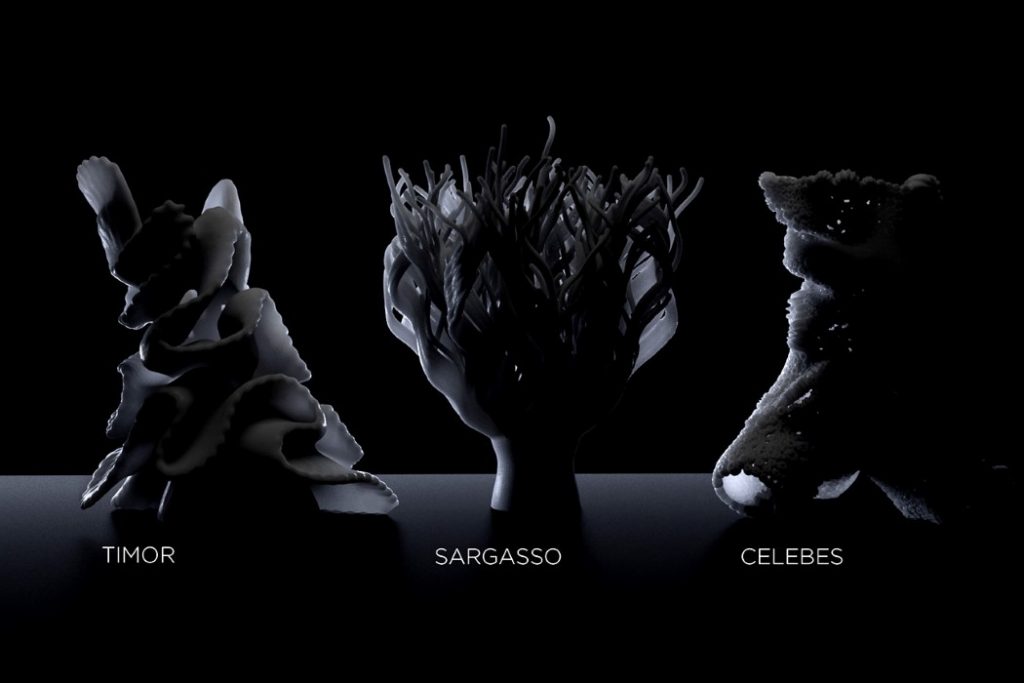
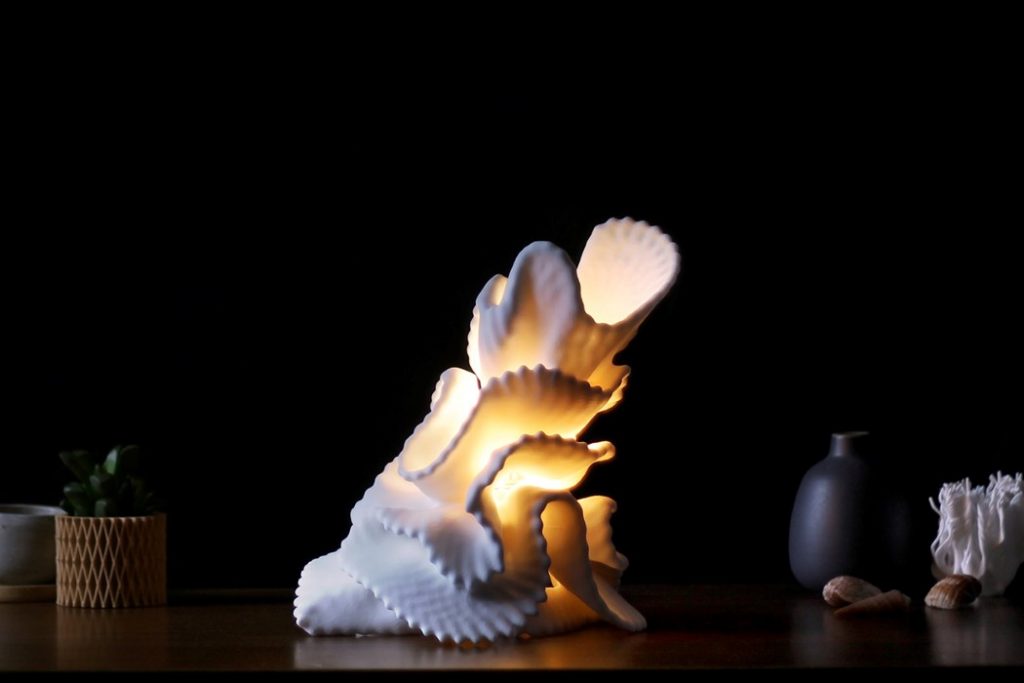
These lamp prototypes took their inspiration from different types of corals coming with varying aesthetics. Mauriello selected only three prototypes from hundreds of them to produce: the Timor, the Sargasso, and the Celebes.
Three members of Mauriello’s Coral Lighting Collection.
The 3d-printed Timor lamp
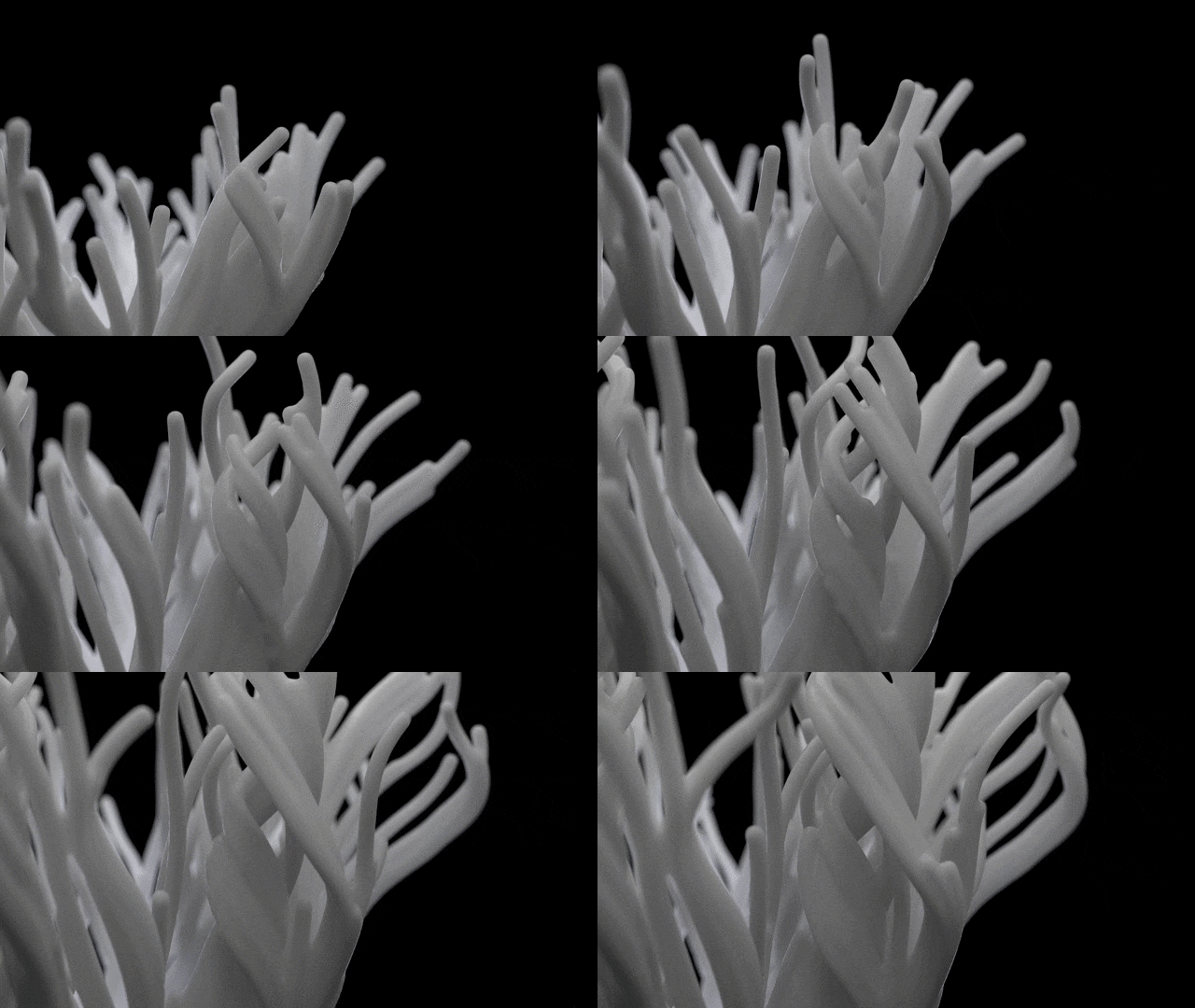
Before 3D printing these Coral Lamps , Mauriello firstly developed the computational algorithms that mimic coral growth patterns,which show the “growth” of the lamps as they come into being. And, more remarkable,all three lamps were 3D printed in the USA, using processes which recycle waste material in an attempt to reduce waste and curb carbon emissions.
The 3D animation is shown for reference only and not really a frame-by-frame recreation in the process of 3D printing the lamps. Instead, Mauriello wanted to make a video to simulate what corals look like underwater.
The Coral Lamp Lighting Collection is Mauriello’s way of paying tribute to the ocean’s beauty.As an senior surfer,Mauriello’ve experienced the beauty and power of the great ocean,in which coral is one of many magical living structures with all sorts of shape, scale and color.Mauriello’s lighting celebrates this thriving life created by an entire coral ecosystem.
For Chinese people used to living in houses made of cement, living in a 3D-printed house must feel quite exciting.In Chinese society, men propose to ladys generally with the prerequisite of having a car and a house.Imagine if, years from now, the house women want most is a 3D-printed one.Well,maybe that’s overstating it a little.But do you know what a 3D-printed house looks like?Germany’s first 3D-printed luxury building has been created, so check it out!
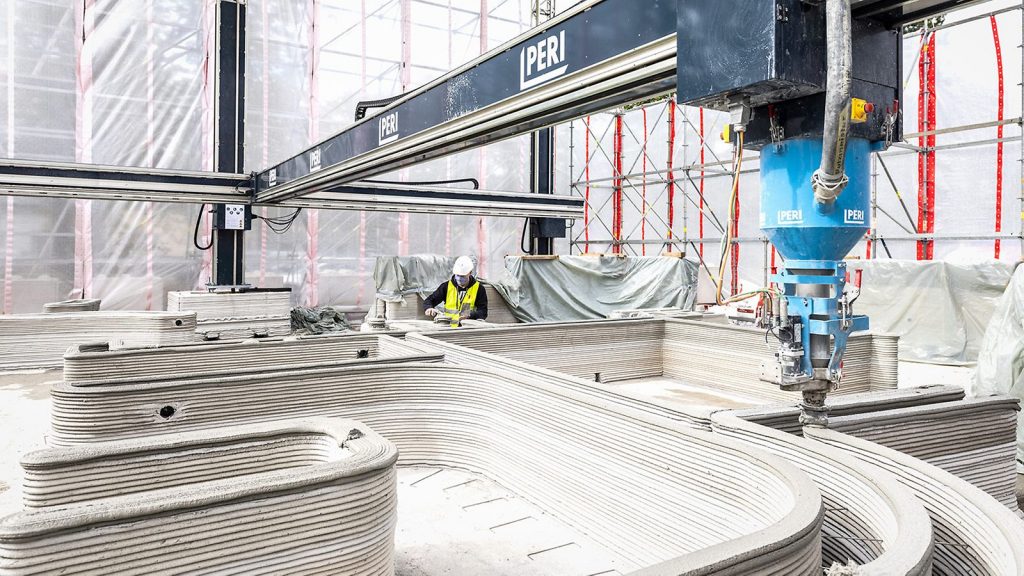
PERI GmbH built Germany’s first 3D-printed residential building in Bekum,Beckum, North Rhine-Westphalia. The house consists of two-storey detached house, each with about 80 square metres of living space, and was built using a 3D building printer.
3D building printing has fundamentally changed the way we build and the process of residential construction.Leonhard Braig,director of production and supply chain at PERI GmbH, said: “Because this is the first building of its kind, the printing speed we proposed was slower than the actual speed.”adding that they hope to take this opportunity to gain more experience in their day-to-day operations, as this will help them make greater use of the technology to make the cost come down in their next project.
The first 3D printed building in Germany was designed by MENSE-KORTE ingenieure + architekten fora design firm named Hous3Druck GmbH.To build it, PERI used 3D printers of type BOD2 for printing., which can be moved from anywhere in the building along its metallic frame and only needs to be calibrated once.
“With conventional construction methods, this would only be possible at great financial cost.” said Waldemar Korte, partner at Mense-Korte. He thought the printing process allows designers more freedom in residential construction.
The building consists of triple-skin cavity walls filled with an insulating compound. During the printing process, the printer takes into account all the pipes and connections to be laid later,such as water pipes,wire way,etc.
BOD2 allows workers to perform work within the print area during printing.This means manual work, such as installing empty pipes and connections, can be easily integrated into the printing process.
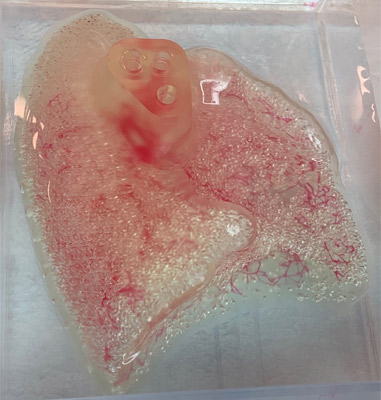
When you use a 3D printer to print everyday items, have you ever thought that you could even print an organ of your own body?It’s hard to believe, but it happens.That’s what CollPlant Biotechnologies and United Therapeutics Corporation are looking to do: they have just expanded their collaboration to 3D bioprinting of human kidneys for transplants.
Currently, more than 100,000 people in the United States are waiting for organ transplants.Kidney patients account for most of the demand, with more than 90,000 people seeking donor organs.Statistics show that 17 people die each day while waiting for new organs.At the same time, a new patient is added to the waiting list every ten minutes.So the American company United Therapeutics paid the Israeli company CollPlant 3 million dollars to speed up the production of the famous Bioink, called rhCollagen.This will provide ideal characteristics for bioprinting, including optimal rheology, greater safety, bio-compatibility and adjustable physical properties.It can also be compatible with a variety of technologies such as extrusion, inkjet or stereolithography.
Bio-printing is a particularly interesting technology for the medical sector, allowing the creation of human tissue and treatments that is suitable for each patient.Every day, methods are evolving and innovations are emerging, which means we’re sure to see functional organs being 3D printed within a few years.The good news for those waiting for transplants is that Bioprinting can design livers, pancreases, spleens and even kidneys.The companies CollPlant Biotechnologies and United Therapeutics Corporation have recognized that this technology could be the future of tailor-made medicine.
In October 2018, the two companies began a collaboration: United Therapeutics received an exclusive license for the CollPlant technology to produce and use bioinks based on human collagen for bioprinted lung transplants.Two years later, the partners began working on a kidney, an organ in need of a donor.CollPlant Bioink is made from human collagen.It requires very strict purification conditions, which makes it extremely long to process, but most importantly it is difficult to produce on a large scale.So the Israeli company relies on a plant platform to produce collagen.They explain: “The production of our recombinant human type I collagen (rhCollagen) starts in genetically modified tobacco plants. The recombinant human protein in the form of ‘procollagen’ is extracted from the leaves of mature plants and processed to produce a highly purified rhCollagen that can be used for the production of medical products.” This innovation will help develop bioprinting and regenerative medicine, provide an opportunity to create quality bioinks for the eventual design of different types of organs.
Thanks to the attention paid by the American United Therapeutics Corporation,the manufacture of kidneys is being addressed in hopes of reducing the number of patients waiting for transplants.
Russian astronauts have successfully 3D printed human tissue in space.
With the advances in science and technology, new ideas are being materialized all the time,from 3D printed cartoon characters to 3D printed organs. From earth to outer space,3D printing is certain to usher in an era of “space manufacturing” and a new round of medical innovation.
3D printing plays a key role in regenerative medicine,which is getting a lot of attention.
In fact, dating back to 1987, the concept of “regenerative medicine” was proposed and received worldwide attention.It was so popular that by the first half of 2019, 933 companies were registered in regenerative medicine globally.And regenerative medicine related technology and industries have since been booming due to the huge demand.
Compared to conventional manufacturing processes,additive manufacturing boasts high repeatibility and efficiency, and is capable of creating complex tissues and organs containing a variety of cells, growth factors and biological materials,a huge boost to regenerative medicine.
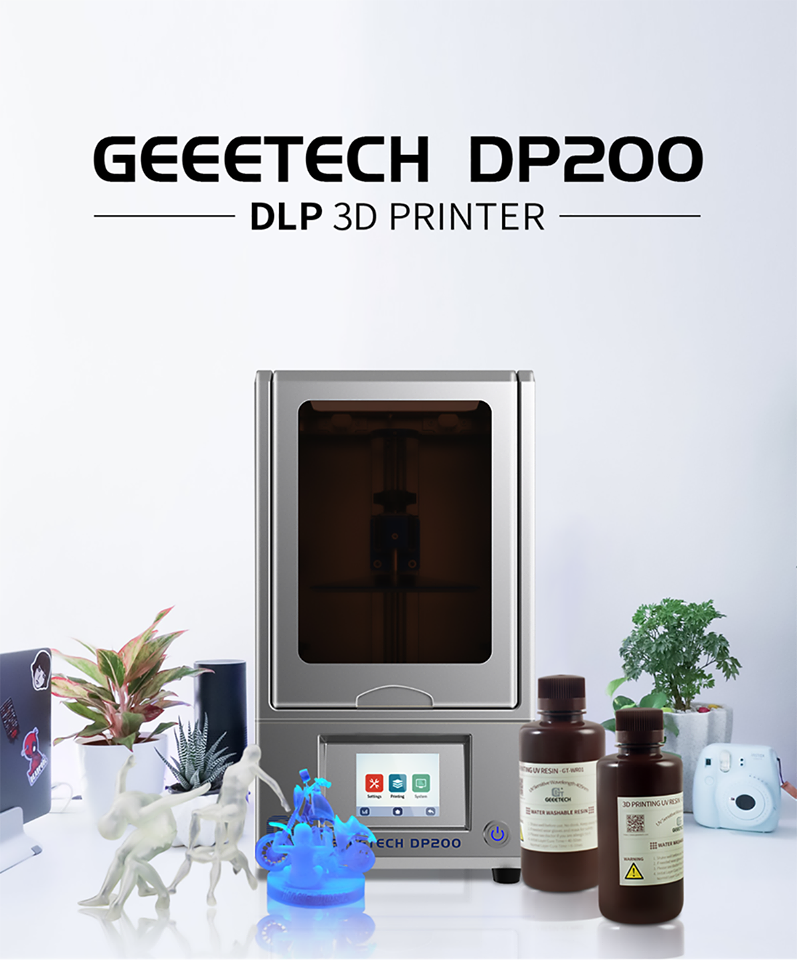
geeetech 3d printer
In April 2019, researchers at Tel Aviv University successfully 3D printed the world’s first vascularized heart,the size of 2.5cm,using the patient’s own cells and biomaterials.This was a key step towards the adoption of 3D printing technology by bioscience in producing functional human organs, causing a sensation in the medical field and beyond.
But this is the first time to have human tissue successfully printed in space.
Human beings have always been fascinated by outer space. Yet, we are intimidated by its harsh environment–In micro-gravity,our bodies are subject to all sorts of conditions, such as muscle atrophy, bone loss and etc.
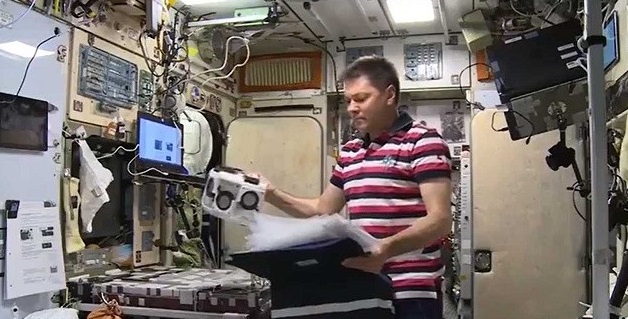
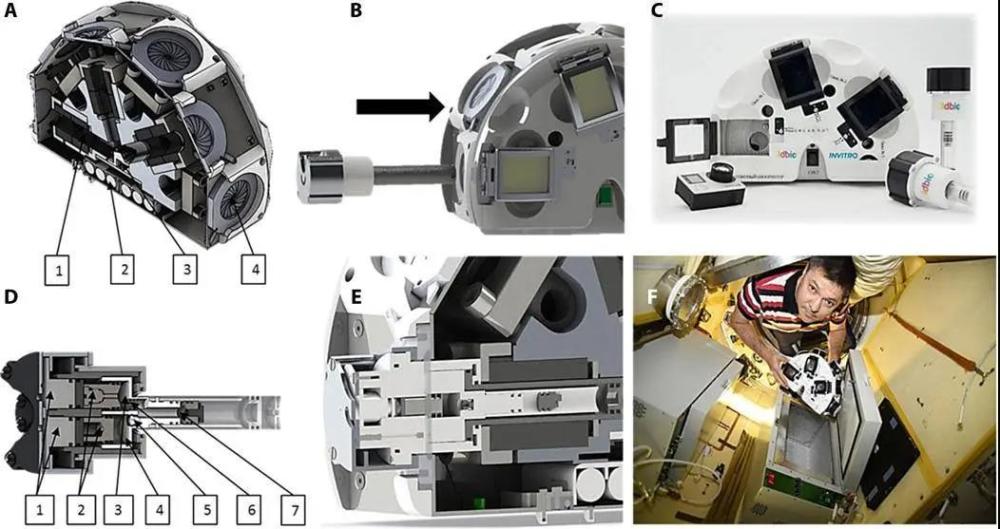
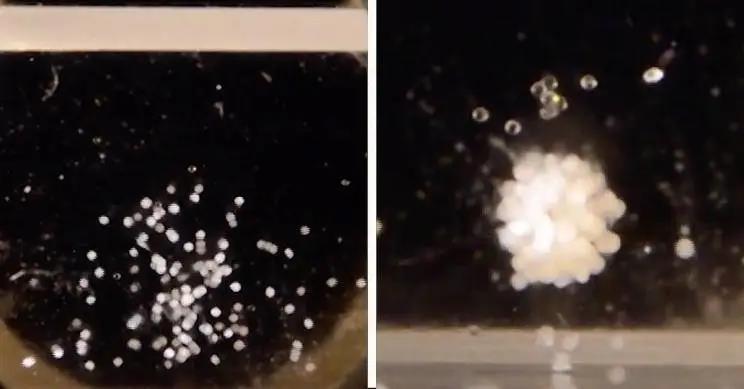
Recently, a Russian astronaut on the International Space Station has created human cartilage in micro-gravity with the help of 3D printing.
Traditional methods of human tissue regeneration involve seeding cells onto bio-compatible “scaffolds”. Once the tissue has finished self-assembling the organ, the scaffold material will be biodegraded. 3D printing organs on Earth is one thing;replicating the same processes in outer space is quite another.There is little gravity on the International Space Station for the scaffold to hold the cartilage cells together.
To get around the problem,Oleg Kononenko used a “scaffold-free” tissue-engineering device,developed by Moscow-based 3D Bioprinting Solutions,in the customized assembly machine.The method leverages a magnetic field instead of gravity to direct cells to where they need to go, thus assembling them into more complex structures.
This has positive implications for astronauts being able to stay in space longer, or for people who want to realize their dreams of space travel.
Utkan Demirci of Stanford University School of Medicine is the driving force behind the maglev biological assembly method, which aims to build tissue in microgravity. The technique leverages two relative magnets close to each other to create a force that pushes the cells toward each other. “Electromagnetic or magnetic fields are controlled, so we can move cells to where we want them to go in order to assemble them into more complex tissue structures.”says Demirci.
In addition,more practice and experimenting are expected here on Earth. Demirci believes that such research in space could lead to interesting discoveries in cancer biology and cross-infection, such as HIV or COVID-19.
But the study also faces a challenge: cells need to be suspended in a paramagnetic medium containing gadolinium (Gd) ions at concentrations that could be toxic to the cells and cause pressure imbalances. And one of the potential solutions to these problems is to use suspension assembly in microgravity, that’s why we finally got to witness the latest experiment conducted by Russian cosmonauts on the International Space Station.
The experiment’s success boosts space regenerative medicine, which, if developed further, may one day help crew members replace body parts. Then astronauts can finally “live on their own hump”!
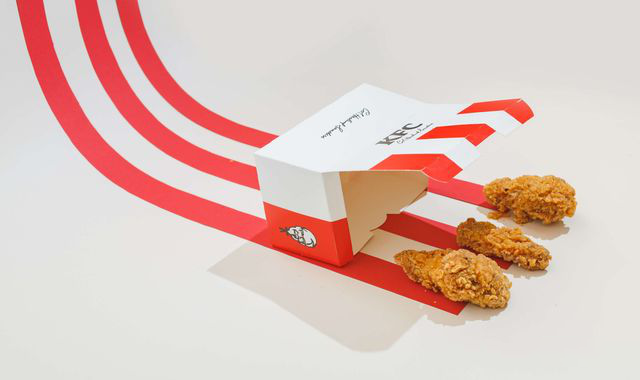
KFC’s efforts to make fried chicken nuggets, crispy on the outside and juicy on the inside, are likely to eliminate the need for broilers to die in the future.
KFC announced a partnership with Russian 3D Bioprinting Solutions to produce the first-ever artificial fried chicken using chicken cells and plant ingredients, with final testing expected this fall.
KFC said it was part of its approach to the innovative idea of “Restaurant of The Future” .With the rising awareness of food nutrition, healthy lifestyles, and environmental protection,more people are beginning to pursue alternative meats.So they hope to “design meat of the future”, creating more environmentally friendly meats,which taste and look alike fried chicken nuggets.
Not plants, real meat! 3D-printed chicken nuggets for “final test” in Fall!
The forefront of 3D bio-printing has actually been in the medical field. It can print various body tissues and even organs through bio-ink. But now it is moving beyond medical use, and is being used by companies to produce food.
3D bio-printing technologies,originally used in medicine,are becoming more popular in food production such as meat, according to the founder of 3D Bioprinting Solutions.
However, consumers should not expect to eat “printed fried chicken nuggets” any time soon. The collaboration is still experimental and costs have not been disclosed, but the biggest issue since the idea of growing meat has been the cost of producing it. Israeli start-up Aleph Farms, for example, has claimed that a pound of hamburger steak still costs as much as $100.
Cultured meat has less impact on the environment and has been seen as one of the meat options of the future. Cultured meat uses only half as much energy as conventional meat;reduces greenhouse gases by 96 percent and saves 99 percent of the land used to produce meat.
KFC points out that 3D printed meat is not only good for the environment, but also tastes like real meat and is healthier for consumers while avoiding any drugs or additives used in agriculture and livestock farming.
According to KFC, the 3D printed nuggets will be tested in Moscow in Fall, but the launch date has not been announced.
The plant-based fried chicken was well received and KFC decided to sell it in its 50 outlets.
KFC’s investment in the future of meat is plant-based meat.
In addition to 3D bio-printed chicken nuggets, KFC partnered with plant meat company– Beyond Meat to launch “Beyond Fried Chicken” in August 2019.
The new “fried chicken”, which sold out in less than five hours during its debut in Atlanta, US, was widely praised.
At the time, KFC’s marketing director was confident that consumers would find it difficult to discover that the chicken nuggets were plant-based meat, and when they tasted them, they would exclaim, “It tastes just like KFC chicken!”
“Beyond Chicken” is also popular among consumers, and following its success in Atlanta, KFC recently announced that it will expand “Beyond Artificial Meat” to 50 U.S. cities, including Los Angeles.
Do you ever wonder what 3D printed meats would taste/look like? Would you like to try some?