显示标签为“space”的博文。显示所有博文

2020年8月10日星期一

NASA allows you to 3D print your own mini Perseverance

United Arab Emirates (UAE) ,China, and the United States, all launched their Mars missions at the start of the second half 2020, rekindling the masses’ interest in outer space exploration.

Despite being the last in launching its Mars mission, NASA(the National Aeronautics and Space Administration of the Unite States ) has taken the lead in releasing 3D-printable data for its Mars Rover “Perseverance” and “Ingenuity Mars Helicopter”,allowing 3D printing hobbyists to download the print-ready STL files and print their own Perseverance.. Download the models here.
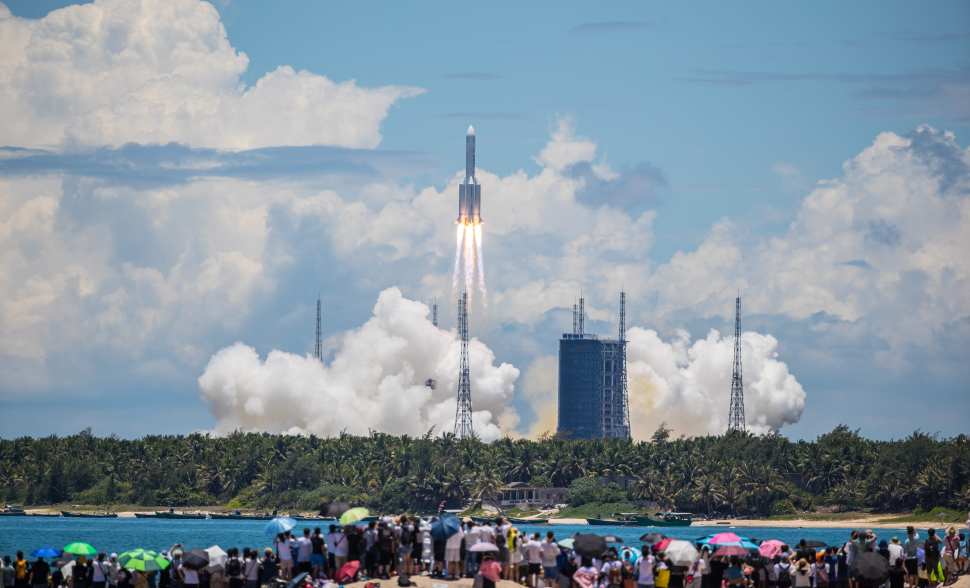
Tianwen-1 Mars probe launched successfully, Wenchang City, Hainan Province, China, July 23, 2020.
photo via oberver.com

After a successful launch on July 30, NASA’s Mars 2020 Perseverance rover is on its way to the Red Planet to look for signs of ancient life and collect rock samples to send back to Earth. Nearly a decade in the making, the 10-foot-long rover is packed with some groundbreaking technologies, instruments and advanced computing capabilities that enables it to land on Mars and survive the cold Martian nights.Unlike its four predecessors, this is the largest and heaviest robotic rover ever built by NASA, and space enthusiasts are enthralled.

Pre-launch events were packed to capacity, with people of all ages from around the world participating in behind-the-scenes observations of the rover, immersive augmented reality virtual tours, 3D visualization of the mission’s scientific instruments, and even the chance to 3D-print a full-size replica of Perseverance.

Make your own mini, simplified “Perseverance”

Engineers at NASA’s Jet Propulsion Laboratory (JPL) who built the probe have released the STL files and assembly instruction. This is the 110th 3D-printable model NASA has made available to the public.It includes everything from Saturn rockets and ISS tools to Orion capsules and even landing sites for many Apollo missions.To make a mini Perseverance, users need to 3D print 39 parts, many of which require multiple prints, and then have them assembled. All the sub-components are available, including the mobile and manipulator arm, chassis, wheels and radioisotope thermoelectric generator (RTG). 
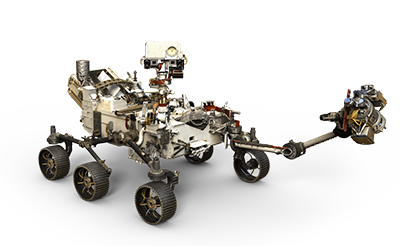
photo credit: NASA

Nearly a decade in the making, the Mars 2020 mission vehicle weighs more than a ton and carries seven scientific payloads, a robotic arm, the Ingenuity Mars Helicopter, 25 cameras and the first microphone to record sound on the Red Planet.

Some of the main parts in the car-sized Mars rovers, such as the cruise stage, descent stage, rear shell and heat shield, were built on the success of NASA’s Curiosity Rover– part of the Mars Science Laboratory mission.

The nuclear-powered Mars rover is NASA’s ninth mission to Mars and the first since the 1970s’ Viking program aiming to find evidence of life on Mars. Before landing in Jezero Crater, a massive basin north of the equator on Mars, the spacecraft will travel 290 million miles over a cold, dark and relentless seven-month journey on a United Launch Alliance (ULA V) rocket launched from Cape Canaveral Air Force Base in Florida.
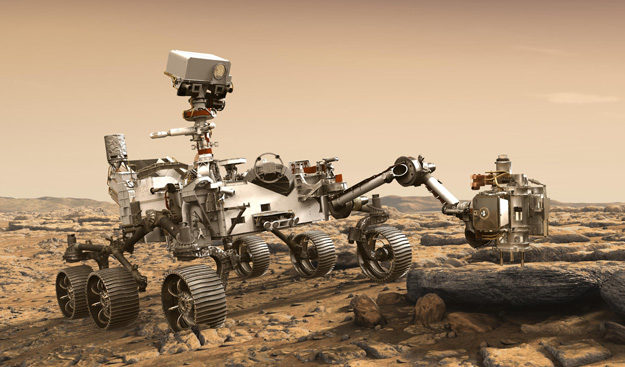
photo via astrobiology.com

2020 turns out to a very busy year in space, with dozens of missions to orbit the moon and Mars.In addition to the United States, there are two other interplanetary missions to Mars: the United Arab Emirates’ Hope, launched on July 14, will study the Planet’s atmosphere and climate; and the recent launch of China’s first ever fully homegrown spacecraft, Tianwen 1. Currently, all missions are on their way and are expected to arrive in February 2021.

The Perseverance’s astrobiology mission is to look for signs of past microbial life on Mars, explore the diverse geology of its landing site, and demonstrate key technologies that will help future robotic and human exploration.While most of Perseverance’s seven instruments are designed to learn more about the planet’s geology and astrobiology,the MOXIE(Mars Oxygen In-Situ Resource Utilization Experiment) instrument is focused on upcoming missions, according to NASA.Designed to prove that it’s possible to convert Martian carbon dioxide into oxygen, it could lead to future versions of MOXIE technology that could become staples in Mars missions, supplying oxygen to rocket fuel and breathable air.
Deep space exploration is still one of the most alluring undertakings.Missions like The Perseverance and others before it have intrigued millions of people.Today, with the help of 3D printing, you can recreate these probes at home. It has proven to be a great tool for engaging students and educators in space-related activities, aiding them in understanding remote terrains, spacecraft engineering and etc.

Source:ofweek.com; astrobiology.com; NASA

This post is originally published on geeetech official site

2020年8月6日星期四

Making history: human tissue 3D printed in space

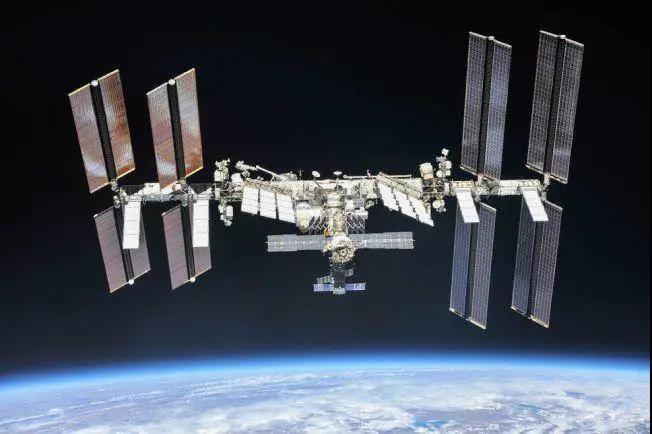
Russian astronauts have successfully 3D printed human tissue in space.

With the advances in science and technology, new ideas are being materialized all the time,from 3D printed cartoon characters to 3D printed organs. From earth to outer space,3D printing is certain to usher in an era of “space manufacturing” and a new round of medical innovation.

3D printing plays a key role in regenerative medicine,which is getting a lot of attention.

In fact, dating back to 1987, the concept of “regenerative medicine” was proposed and received worldwide attention.It was so popular that by the first half of 2019, 933 companies were registered in regenerative medicine globally.And regenerative medicine related technology and industries have since been booming due to the huge demand.

Compared to conventional manufacturing processes,additive manufacturing boasts high repeatibility and efficiency, and is capable of creating complex tissues and organs containing a variety of cells, growth factors and biological materials,a huge boost to regenerative medicine.

geeetech 3d printer

In April 2019, researchers at Tel Aviv University successfully 3D printed the world’s first vascularized heart,the size of 2.5cm,using the patient’s own cells and biomaterials.This was a key step towards the adoption of 3D printing technology by bioscience in producing functional human organs, causing a sensation in the medical field and beyond.


But this is the first time to have human tissue successfully printed in space.


Human beings have always been fascinated by outer space. Yet, we are intimidated by its harsh environment–In micro-gravity,our bodies are subject to all sorts of conditions, such as muscle atrophy, bone loss and etc.


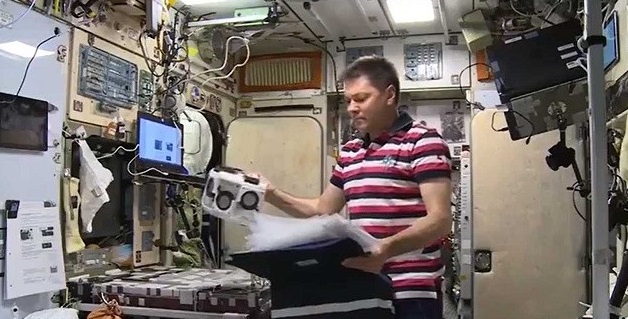
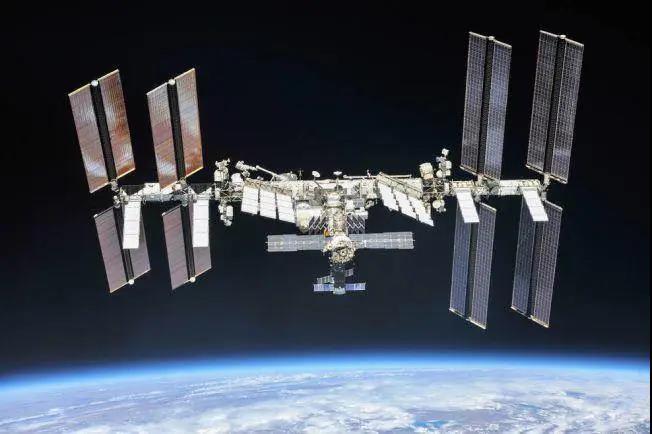
Recently, a Russian astronaut on the International Space Station has created human cartilage in micro-gravity with the help of 3D printing.

Traditional methods of human tissue regeneration involve seeding cells onto bio-compatible “scaffolds”. Once the tissue has finished self-assembling the organ, the scaffold material will be biodegraded. 3D printing organs on Earth is one thing;replicating the same processes in outer space is quite another.There is little gravity on the International Space Station for the scaffold to hold the cartilage cells together.

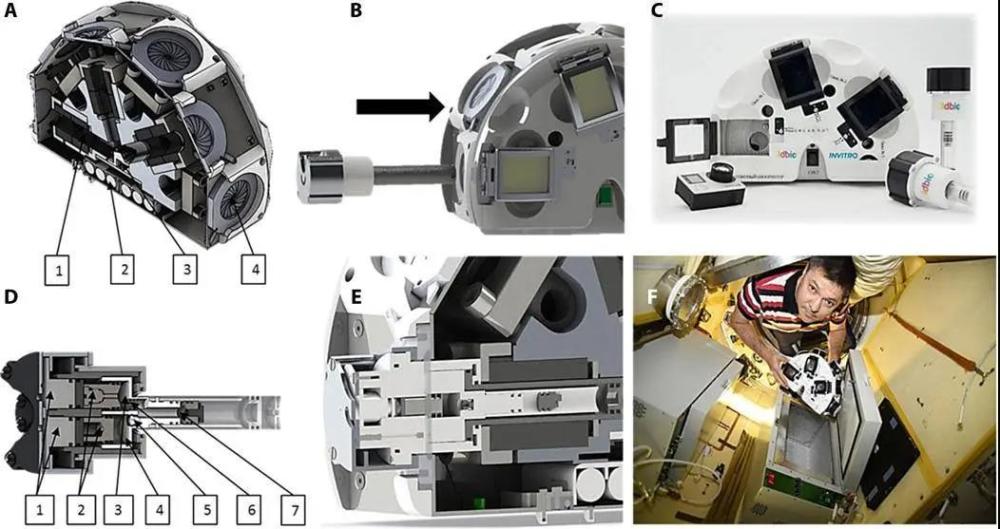
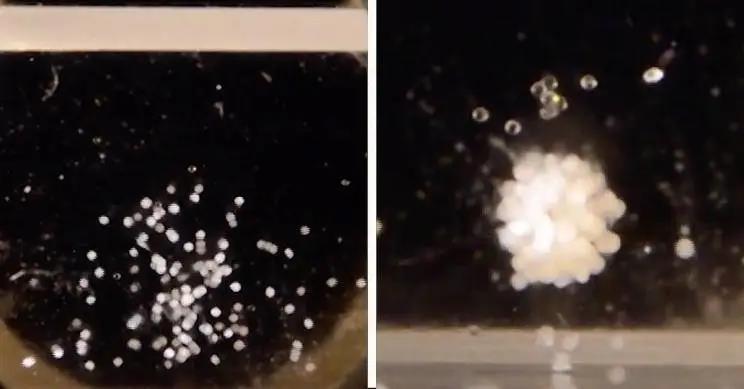
To get around the problem,Oleg Kononenko used a “scaffold-free” tissue-engineering device,developed by Moscow-based 3D Bioprinting Solutions,in the customized assembly machine.The method leverages a magnetic field instead of gravity to direct cells to where they need to go, thus assembling them into more complex structures.

This has positive implications for astronauts being able to stay in space longer, or for people who want to realize their dreams of space travel.

Utkan Demirci of Stanford University School of Medicine is the driving force behind the maglev biological assembly method, which aims to build tissue in microgravity. The technique leverages two relative magnets close to each other to create a force that pushes the cells toward each other. “Electromagnetic or magnetic fields are controlled, so we can move cells to where we want them to go in order to assemble them into more complex tissue structures.”says Demirci.

In addition,more practice and experimenting are expected here on Earth. Demirci believes that such research in space could lead to interesting discoveries in cancer biology and cross-infection, such as HIV or COVID-19.

But the study also faces a challenge: cells need to be suspended in a paramagnetic medium containing gadolinium (Gd) ions at concentrations that could be toxic to the cells and cause pressure imbalances. And one of the potential solutions to these problems is to use suspension assembly in microgravity, that’s why we finally got to witness the latest experiment conducted by Russian cosmonauts on the International Space Station.

The experiment’s success boosts space regenerative medicine, which, if developed further, may one day help crew members replace body parts. Then astronauts can finally “live on their own hump”!

Source: qq.com

https://www.geeetech.com/blog/2020/08/making-history-human-tissue-3d-printed-in-space/

This post is originally published on geeetech official blog.

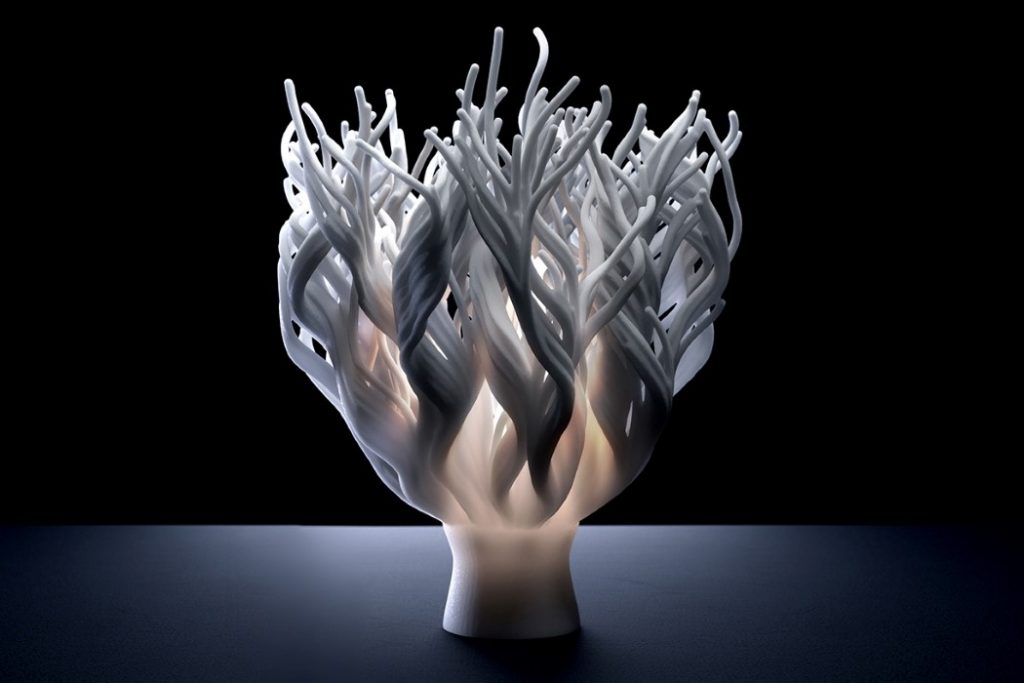
Watch These Bionic 3D -Printed Coral Lamps

  It’s one thing to create attractive and functional light fixture, and quite another thing to make a stunning light using algorithms that c...